

Engineering a New Superyacht Identity: Inside ARES Yachts
Interview with Piraye Sahinkaya Orhun, Yacht Projects Director of ARES Yachts
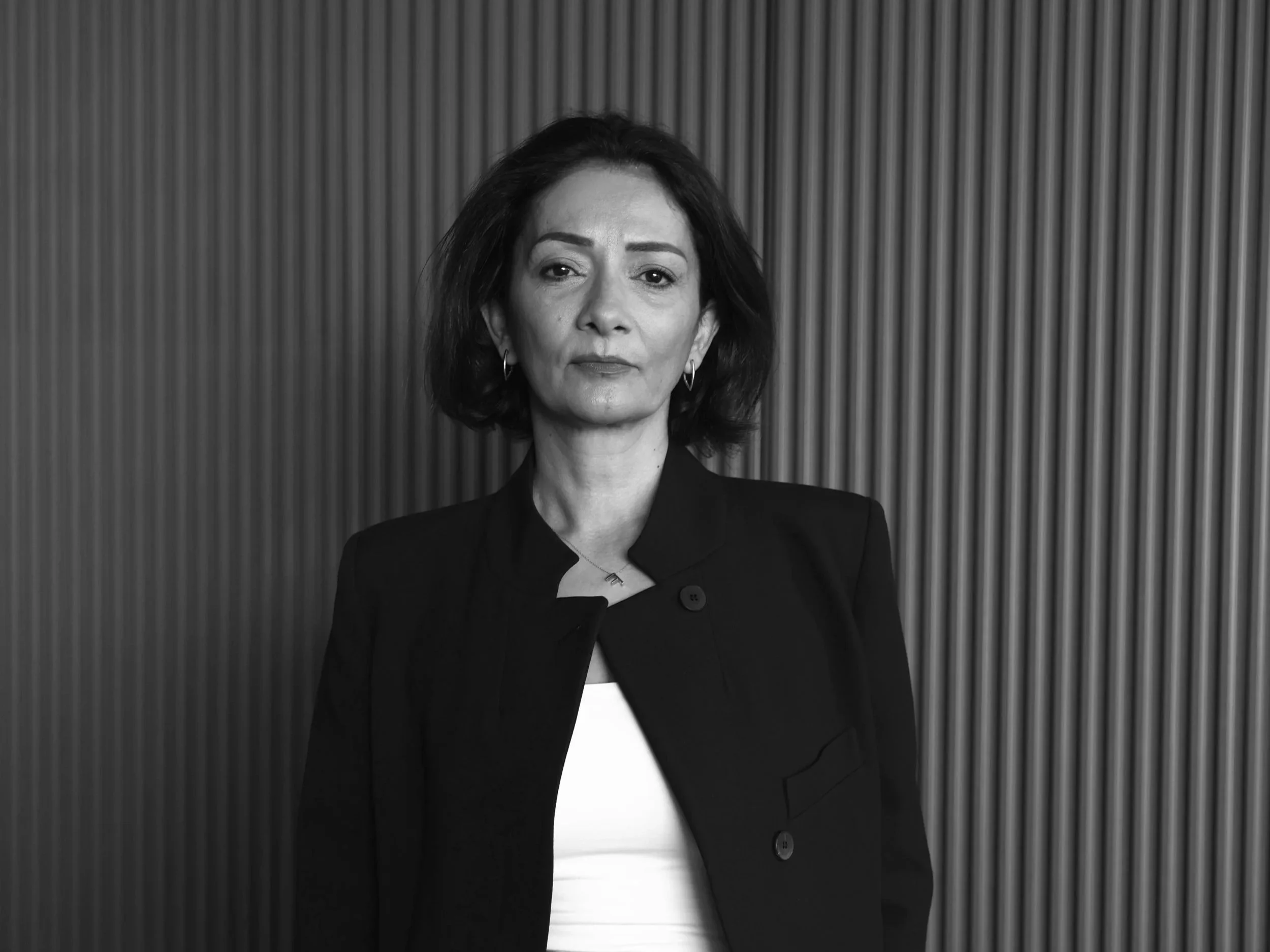
Piraye Sahinkaya Orhun, Yachts Projects Director of ARES Yachts
ARES Yachts has made a confident entrance into the superyacht world with SIMENA, ATLAS and SPITFIRE, three very different projects shaped by the same strong engineering background.
In this interview, Piraye Sahinkaya Orhun, Yacht Project Director of ARES, shares how nearly two decades of naval and commercial shipbuilding experience are being translated into custom yacht construction, what sits behind each project, and how ARES plans to build its place in the international superyacht market.
ARES Yachts made its public superyacht debut with a rare level of momentum: three 50-metre-plus projects, backed by a shipyard with two decades of experience in military and commercial vessel construction. In the superyacht world, what does “arriving” actually mean for ARES?
I don't think arriving is about launching three projects at once.
For us, it is about reaching a point where we feel ready to compete in one of the most demanding sectors of the maritime industry. ARES has been designing and building technically sophisticated naval and commercial vessels for nearly two decades. That experience gave us a proven technical expertise, disciplined project management and a practical approach to solving complex technical challenges. Those foundations did not change when we entered the superyacht market. What did change was the product itself. Building a superyacht requires a different level of craftsmanship, refinement and attention to detail. It is a world where engineering remains essential, but it has to coexist with design, emotion and the owner's lifestyle.
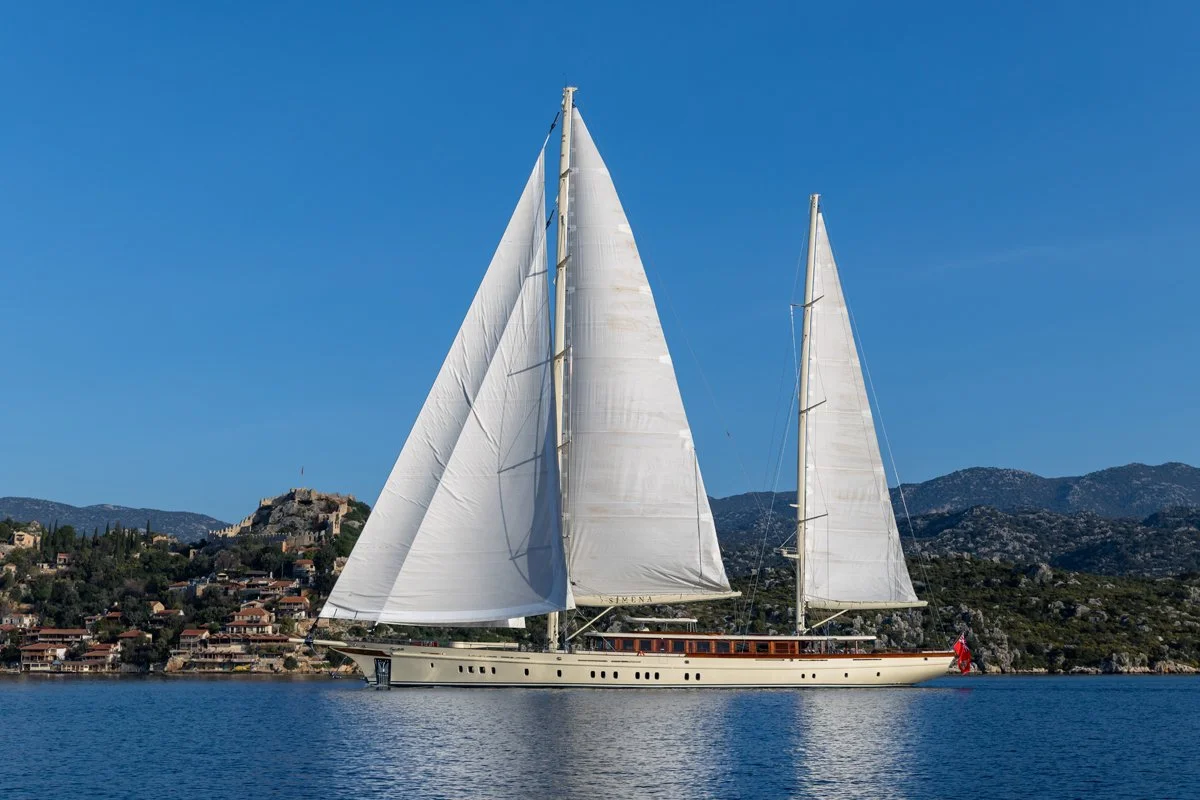
SIMENA, built by Ares Yachts. Photo: Jeff Brown.
We also felt it was important to introduce ARES Yachts with a portfolio rather than a single concept. SIMENA, ATLAS and SPITFIRE: They are very different yachts, but each one combines proven engineering with contemporary design and practical functionality. For us, arriving simply means earning credibility. That only happens by delivering what you promise, project after project.
How did the vision of ARES’ board shape this move into superyachts?
This was never a short-term business decision. The Board had a clear long-term vision of establishing ARES as a serious player in the international superyacht market, and that meant investing long before presenting the first projects.
In 2022, we expanded our facilities with a dedicated superyacht production hall designed to accommodate multiple large custom projects simultaneously. Meanwhile, we created dedicated superyacht offices together with a comprehensive owner representative and crew facility, including offices, lounges and accommodation. We wanted the infrastructure, the team and the working environment to be ready before introducing ARES Yachts to the market.
The same thinking applied to the projects themselves. We took the time to develop the right concepts, work with internationally recognised designers and establish the internal organisation needed for fully custom yacht construction.
The Board understood that reputation in this industry is built over many years. Our objective was never simply to build superyachts in Türkiye. It was to demonstrate that a Turkish shipyard can compete internationally through engineering, quality, reliability and execution.
Coming from a background in commercial and naval vessel production, what know-how has proved most valuable in superyacht building, and were there any assumptions or working methods that had to be rethought for the luxury yacht market?
One thing we realised very early is that good engineering alone does not make a great superyacht.
Our background in naval and commercial shipbuilding gave us a very solid technical foundation. We are used to managing complex projects where safety, reliability, weight control and system integration are critical. That experience transferred naturally into superyacht construction.
What was different was everything the owner actually sees and experiences.
In commercial vessels, the priority is functionality. In a superyacht, functionality is expected, but it also has to be beautifully executed. The quality of a timber joint, the way different materials meet, the consistency of a paint finish or even the feel of a door closing all become part of the product.
That meant adapting not only our production processes but also the way we looked at quality. We strengthened our teams dedicated specifically to yacht interiors, outfitting and finishing, worked closely with internationally experienced designers and suppliers, and introduced additional quality control throughout the build. It wasn't about replacing what we already knew. It was about adding another layer of precision and craftsmanship.
In the end, SIMENA reflects that evolution. She combines the technical background we developed through years of commercial and naval construction with the level of finish and attention to detail expected in today's superyacht market.
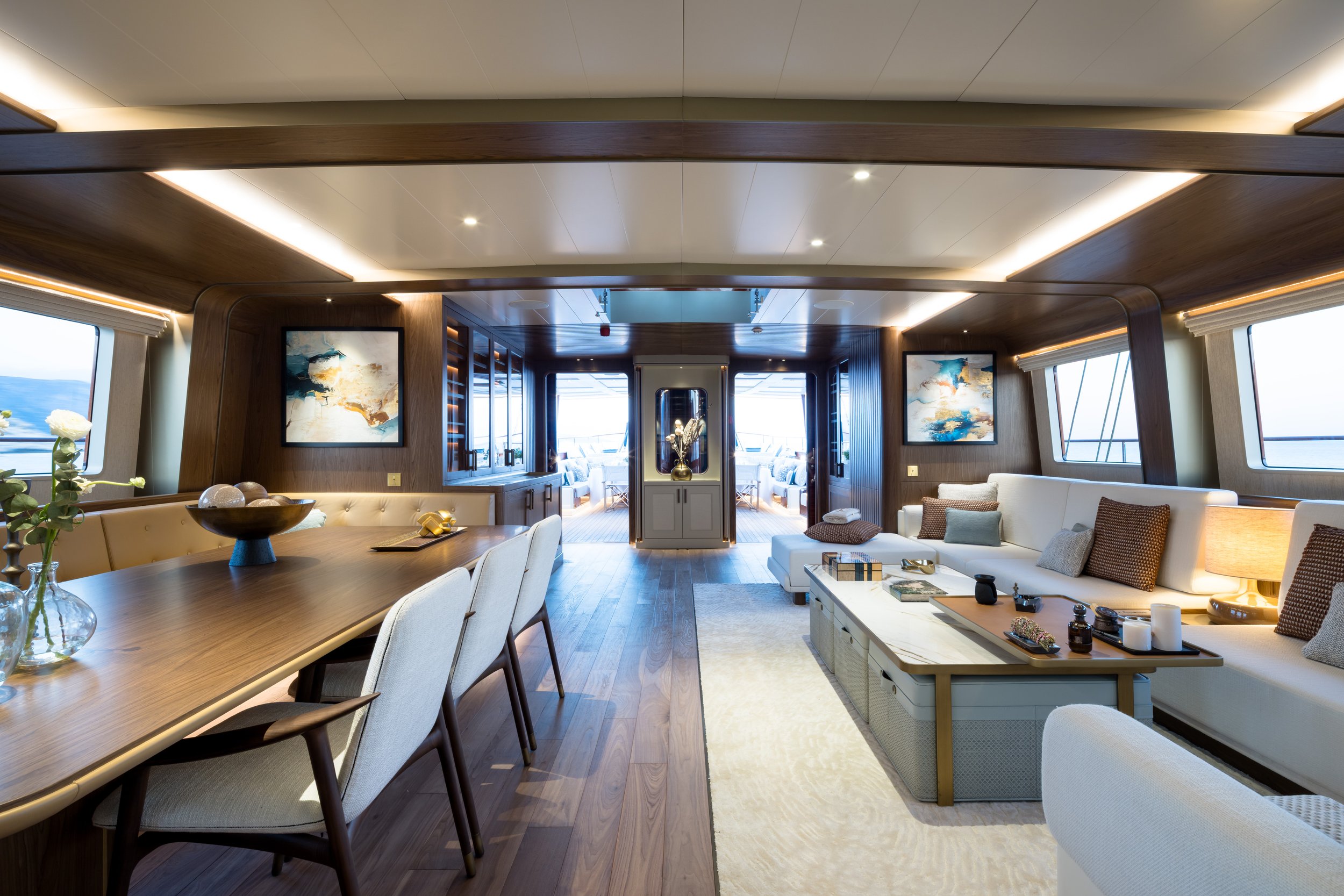
SIMENA interior. Photo: Jeff Brown
SIMENA feels like a statement of identity as much as a yacht: a 62-metre hybrid ketch with clipper-ship references, teak decks, mahogany detailing and a modern hybrid system. In a sector where motor yachts dominate the order book, choosing a sailing yacht as a flagship is a very deliberate statement.
What was the dream behind SIMENA, and why was this the right project to introduce ARES Yachts to the world?
It was a very deliberate decision.
If your first yacht is going to introduce your brand to the market, it should represent what you stand for. For us, that yacht was always going to be SIMENA. There is also a personal side to the story. Our Chairman, Kerim Kalafatoğlu, comes from Sürmene on Türkiye's Black Sea coast, a region with a centuries old boatbuilding tradition. His family's connection with wooden boatbuilding naturally influenced his appreciation for sailing yachts and traditional craftsmanship. That heritage became one of the inspirations behind the project.
Equally important, we didn't want to build a nostalgic yacht. Right from the outset, the objective was to create a timeless sailing yacht that combines classical proportions with contemporary engineering and modern onboard comfort.
Choosing a sailing yacht also reflected the confidence in our own engineering experience. A large sailing yacht is one of the most technically demanding types of yacht to design and build. Beyond the yacht itself, you are integrating a complex rig, significant structural loads and sophisticated sailing systems into a platform that must remain elegant, comfortable and reliable.
Today, when we look at SIMENA, we see that she became much more than our first superyacht. She gave us the opportunity to demonstrate what ARES could bring to this sector. She brought together good engineering, attention to detail and a genuine respect for traditional yacht design.
On SIMENA, how did the team decide where “classic with character” should stop and modern functionality should begin? Which exterior or interior feature best captures that negotiation between nostalgia and modern livability?
That balance was something we discussed throughout the project. It wasn't a single design decision. It was part of almost every decision we made.
From the beginning, we agreed that SIMENA should have a timeless profile. The sweeping sheerline, clipper bow, ketch rig and mahogany detailing all contribute to that classic character. In parallel, she had to function as a modern superyacht, with the level of comfort, technology and usability that today's owners expect.
The challenge was making those two worlds work together without one dominating the other. Every time a new technical requirement or owner request was introduced, we asked ourselves the same question: does it improve the yacht without compromising the original design philosophy?
The recessed flybridge is probably the best example. It was one of the most technically challenging parts of the project because it affected the yacht structurally, aesthetically and functionally. However, it allowed us to create an additional outdoor living space while preserving the clean profile that was so important to the overall design.
The same thinking continued inside the yacht. Rather than creating an interior that felt formal or traditional, the objective was to create spaces that owners would genuinely enjoy living in for extended periods. The materials are classic, but the atmosphere is contemporary, comfortable and understated.
Looking back, I think that balance is what defines SIMENA. She respects tradition, but she was never designed to live in the past.
ATLAS looks like the clearest expression of the “expedition ambition” idea: under 500 GT, 5,000 nautical miles of range, a Van Oossanen FDHF hull, and a layout that prioritises movement between sea, toys and social spaces. What specific owner did you have in mind when shaping her brief?
We never started by defining a demographic or an age group. We started by thinking about how today's experienced owners actually use their yachts.
Many owners no longer want to choose between an explorer yacht and a luxury motor yacht. They expect both. They want to cruise long distances, spend extended periods away from marinas and explore remote destinations, but they also expect generous living spaces, natural light and the same level of comfort they would find on a contemporary superyacht. That thinking shaped ATLAS from the very beginning.
The 499 GT target was a conscious decision, not simply a regulatory exercise. We wanted to maximise interior volume while remaining below an important operational threshold. The Fast Displacement Hull Form developed by Van Oossanen supports that philosophy by combining efficiency, comfort and long-range capability without compromising the owner's onboard experience.
Another priority was the relationship between the yacht and the sea. Rather than separating guest spaces, beach areas and toy operations, we wanted them to work together as part of everyday life on board. Owners today spend much more time at anchor than underway, so those spaces have become just as important as the yacht's cruising capability.
In the end, ATLAS was designed for an owner who wants to travel further without feeling that they have chosen an expedition vessel over a luxury yacht.
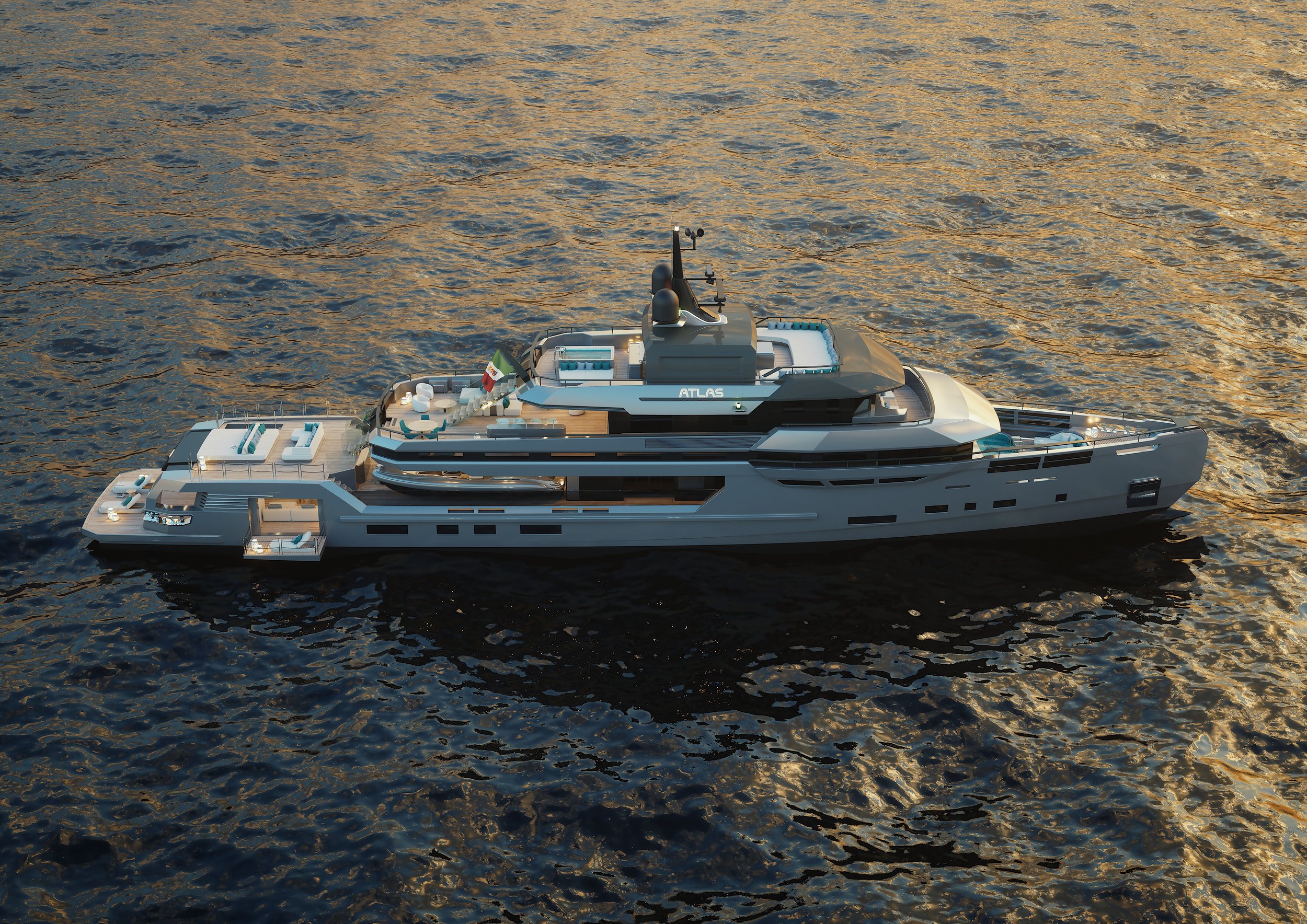
ATLAS, project by Ares Yachts
ATLAS has one of the most distinctive layouts in the portfolio. Combined with optional hybrid propulsion and solar panels, the project seems to challenge the idea that expedition yachts must be defined primarily by ruggedness, range and payload.
Which conventional explorer-yacht assumption were you most consciously trying to break, and how does ARES see the balance between cleaner operation and the performance expectations of today’s owners?
I think the traditional definition of an explorer yacht is changing.
In the past, these yachts were often designed around endurance first. Range, storage capacity and technical capability tended to drive the entire design. Those qualities are still important, but they are no longer enough on their own.
Today's owners expect an explorer to feel like a luxury yacht. They want generous outdoor spaces, direct connections with the sea, quiet operation at anchor and efficient systems, without compromising the ability to cruise long distances.
That was the thinking behind ATLAS. We never wanted her to feel heavy or purely functional. Instead, we focused on creating a yacht that is equally comfortable crossing an ocean or spending several weeks in a secluded bay.
The optional hybrid propulsion system and solar panels are part of that philosophy. We don't see sustainability as a feature that should define the yacht. It should simply make the yacht more efficient and more enjoyable to own and operate.
Performance was approached in the same way. We don't believe owners should have to choose between capability, efficiency and comfort. With the Van Oossanen Fast Displacement Hull Form and a carefully optimised platform, our objective was to bring those qualities together rather than treating them as compromises.
Looking ahead, this is where we see the explorer segment heading. There will be less emphasis on appearing rugged and more emphasis on how the yacht performs and how people actually live on board.
SPITFIRE is perhaps the boldest proposition in the portfolio because it openly borrows from the ARES 150 BOLD offshore patrol vessel.
Why was the ARES 150 BOLD the right platform to inspire this project, and when you translate a hull idea from a patrol craft into a 50-metre-plus superyacht, what perception of the superyacht industry did you want to challenge?
One of the advantages of coming from a commercial and naval background is that you don't always start with assumptions that already exist in the superyacht industry.
ARES 150 BOLD had already proven itself as a highly capable offshore platform. Its hull had been developed and proven in demanding operating conditions. That gave us a clear technical foundation.
Of course, SPITFIRE is not a patrol vessel converted into a yacht. The hull has been further developed and optimised specifically for superyacht use, while everything above the waterline was conceived around luxury, comfort and contemporary living.
What we really wanted to challenge was the assumption that high performance and luxury are somehow incompatible. We don't think owners should have to choose between a yacht that performs exceptionally well and one that offers refined living spaces.
For us, SPITFIRE demonstrates how proven engineering from another sector can create a better yacht. Not because it comes from a patrol vessel, but because good engineering remains good engineering, whatever the application.
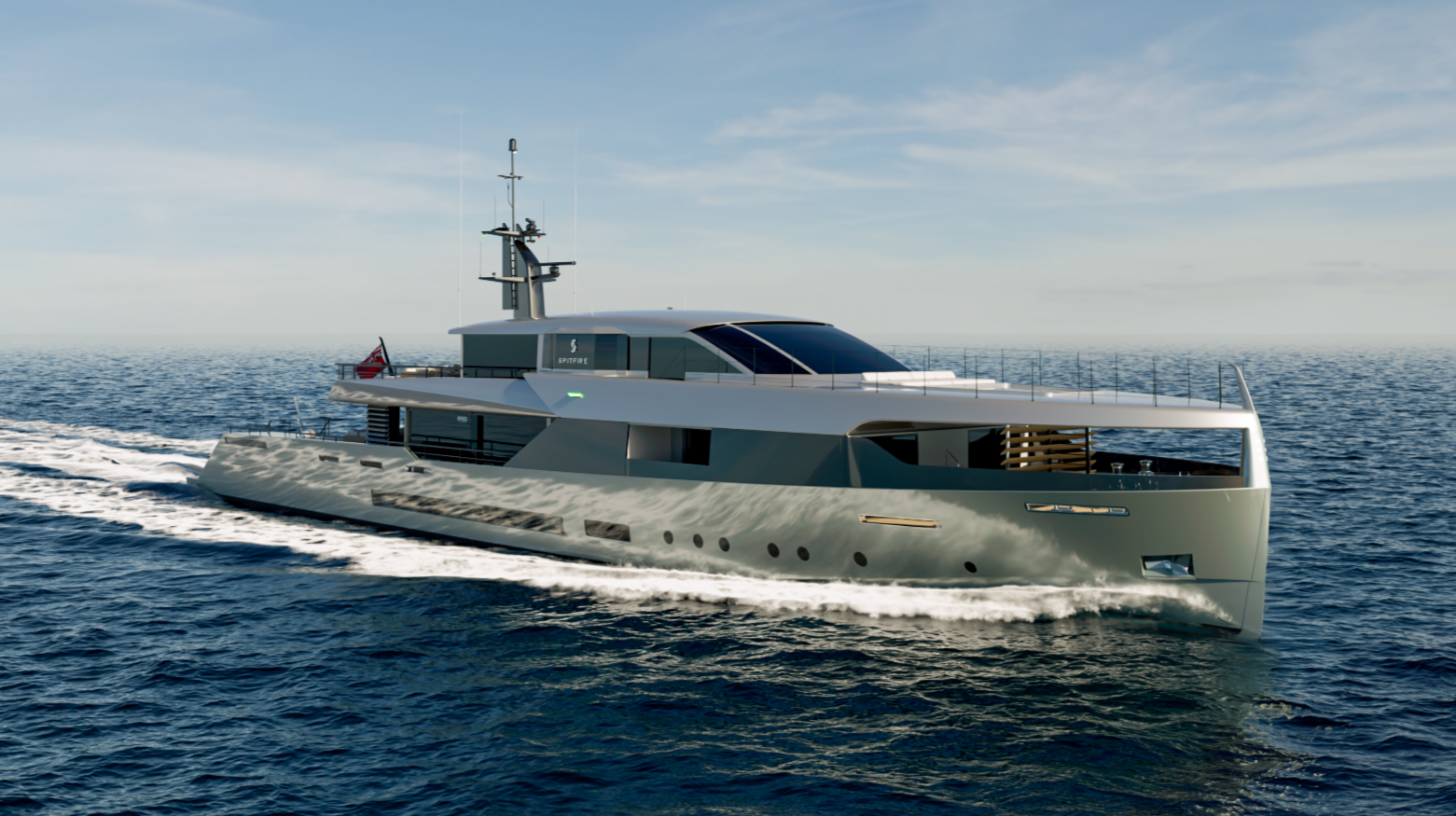
SPITFIRE, project by Ares Yachts
Each project is also tied to a different design partnership: Taka Yacht Design and Design Unlimited on SIMENA, Hot Lab and Van Oossanen on ATLAS, and Bannenberg & Rowell with Lateral on SPITFIRE.
What does ARES look for in an external partner, and what part of the yacht must remain unmistakably “ARES” regardless of who designs it?
Every project starts differently. We first define the character, technical priorities and intended use of the yacht, and then select the design team that best fits that vision. That is why we worked with Taka Yacht Design and Design Unlimited on SIMENA, Hot Lab and Van Oossanen on ATLAS, and Bannenberg & Rowell together with Lateral on SPITFIRE. Each partnership brought a different perspective and a different set of strengths.
At the same time, every project follows the same development process within ARES. The exterior design may come from different studios, but the engineering, production planning, buildability and technical integration are developed together with our in-house teams from a very early stage.
For us, that collaboration is essential. The best projects are never created by designers working separately from engineers or the shipyard. They come from teams that challenge each other throughout the design and construction process.
What remains consistent across every ARES project is the way design and engineering are developed together from the outset. We place a clear emphasis on technical feasibility, functionality and delivering a yacht that performs as well in reality as it does on paper.
SIMENA, ATLAS and SPITFIRE each seem to speak to a very different owner profile, from the romance of a modern sailing yacht to the practicality of exploration and the performance-driven character of a military-inspired superyacht.
Does building such different propositions under one brand create challenges in terms of production planning, marketing language and cost discipline?
It certainly makes life more challenging, but we don't see that as a disadvantage. We never wanted to create three versions of the same yacht. SIMENA, ATLAS and SPITFIRE were developed independently because they are intended for very different owners and very different ways of using a yacht.
Of course, that creates additional work. Every project has its own design partners, engineering priorities and production requirements. But it also keeps the organisation flexible. Working on different types of yachts makes our teams more capable, because they are constantly solving different kinds of problems rather than repeating the same solutions. From a commercial perspective, we also think today's market values authenticity. Owners are looking for yachts that have been developed with a clear purpose, not simply adapted from an existing platform.
Although the projects are very different, they all follow the same approach inside ARES. We maintain a consistent focus on engineering, practical functionality and buildability from the earliest stages of development. That working method remains the same, even when the yachts themselves are completely different.
Beyond SIMENA, ATLAS and SPITFIRE, ARES has already discussed a future 65m, 75m and 85m Superyacht Range centred on diesel-electric pods and even early methanol consideration. What should readers take from that roadmap?
I think the roadmap should be seen as an indication of where the industry is heading, rather than a fixed product plan.
There is a great deal of discussion today around hybrid systems, pod propulsion, methanol and other alternative energy solutions. We follow these developments very closely, but we also believe new technologies need to be introduced at the right time and for the right reasons.
Different yachts have different operational profiles. What works well for one project may not necessarily be the best solution for another. That is why we prefer to develop flexible platforms that can adapt as technologies continue to mature.
Our role as a shipyard is to understand these technologies, evaluate them carefully and be ready to apply them when they genuinely improve the yacht, whether that means greater efficiency, better operational flexibility or a better owner experience.
For us, innovation has to solve a real problem. We are not interested in adopting technology simply because it is new.
ARES Yachts is now focused on the superyacht sector, but ARES Shipyard also carries a very rare kind of production know-how from its composite boat programmes.
The ARES 35 FPB project has been described as the largest serialproduction project in Türkiye’s shipbuilding history, with 122 fast patrol boats planned for the Turkish Coast Guard and Police.
Looking ahead, do you see a commercial opportunity to transfer that repeatproduction discipline, composite expertise and delivery speed into CE-certified yacht production below 24 metres, or is the long-term focus firmly on larger custom superyachts?
The experience we gained through our composite programmes is certainly valuable. Managing large serial production projects teaches you a great deal about production planning, quality control, supply chain management and consistency. Those lessons stay with you, regardless of what type of vessel you build.
Could that experience be applied to smaller yachts? Absolutely. From a technical and production perspective, we certainly have the experience to do so. The bigger question is whether it fits our long-term strategy.
Today, our main focus is on fully custom superyachts because that is where we can make the greatest contribution and where our technical background gives us the clearest advantage. That doesn't mean we would never consider a sub 24 metre product in the future. If we did, it would have to offer something genuinely different rather than simply becoming another series in an already crowded market.
For now, our priority is clear. We want to continue building larger, technically sophisticated custom yachts while remaining open to new opportunities if they make strategic sense for the company.
The United States remains the dominant single market in superyacht ownership, with a 23.6% share overall and around 29% of new superyachts over 130 feet. At the same time, wealth creation and next-generation capital are becoming increasingly important across Asia.
As ARES Yachts builds international visibility, are you considering a stronger physical presence outside Türkiye, perhaps through an overseas office or representative hub?
Yes, it is something we are actively considering.
Superyacht building is an international business, and being close to owners, brokers, project managers and owner's representatives becomes increasingly important as your portfolio grows. While the yachts are built in Türkiye, the relationships are built around the world. That doesn't necessarily mean opening offices everywhere. We are looking at different models, including regional hubs and strategic partnerships in locations where the industry naturally comes together, such as Monaco, Northern Italy and other established superyacht centres.
For us, the priority is not simply having an address in another country. It is making sure owners and their teams have easy access to us throughout the entire project, from the first discussions through construction and after delivery.
As we take on more international projects, our presence outside Türkiye will naturally grow with them. We will expand where it gives owners, their representatives and our partners easier access to the shipyard.
ARES Yachts will join the international superyacht community at the 4th edition of Superyacht Summit Türkiye, taking place on 4–5 November 2026 in Istanbul. Bringing together shipyards, designers, brokers, owner representatives and industry leaders, SST 2026 will explore the forces shaping the next chapter of global yachting.
Discover the programme and secure your place at Superyacht Summit Türkiye.
