

The Sustainability Reality Check: Marco Casali on Design, Experience and Real Impact in Yachting
Having shaped the design of several yachts built in Türkiye, including projects of GX Yachts and VisionF, Marco Casali, the Founder of Too Design, has been closely involved in some of the industry’s most visible conversations around responsible yacht design. His work sits at the intersection of architecture, owner experience and new-generation yacht building, making him a particularly relevant voice in a market where sustainability is no longer treated as a niche subject.
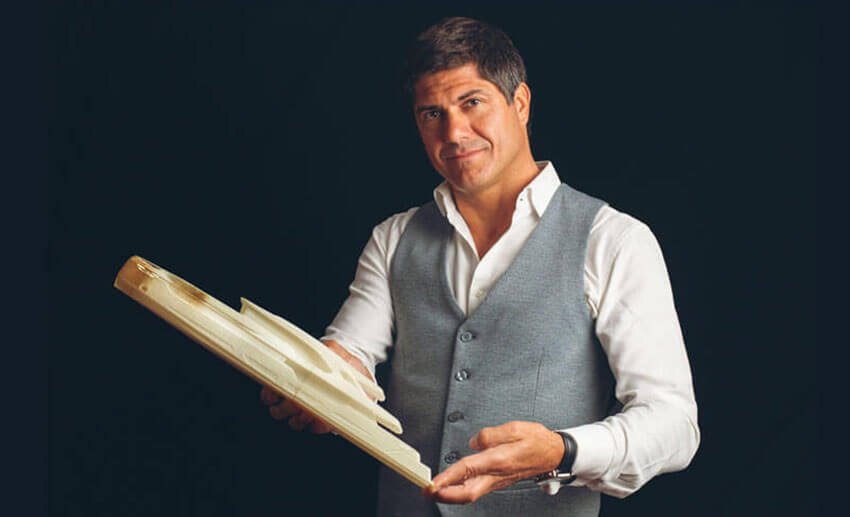
We spoke with Casali about what sustainability really means in yachting today, where the industry still falls short, and why the future of responsible design may be less about technical claims and more about creating a better way to live at sea.
For Casali, the biggest gap still sits at the design stage. Too often, sustainability is discussed as a system, a technology package or a marketing statement, rather than as something capable of changing the form, function and experience of a yacht from the very beginning. “Too many times, the shape of the yacht is not influenced by a real wish of creating a sustainable project,” he notes.
That distinction matters. In an industry where innovation can often be reduced to propulsion headlines or technical claims, Casali’s view brings the conversation back to architecture. If a yacht’s proportions, volume, relationship with the sea and use of onboard spaces remain largely conventional, then sustainability risks becoming an addition rather than a principle. The challenge is not simply to install greener systems, but to allow sustainability to inform the DNA of the project.
For Casali, the type of platform plays a decisive role in how far this thinking can be pushed. Catamarans, for instance, often create a different design opportunity. Their volume, stability and efficiency can allow designers to explore more sustainable choices with fewer compromises, particularly when the owner is aligned with that ambition from the beginning.
“With catamarans, we were lucky to have owners strongly pushing for sustainability with fewer compromises,” he says. “With a traditional monohull superyacht, you clearly have to face a more traditional shape.”
That contrast captures one of the industry’s central challenges. Sustainable ambition is often strongest at concept stage, but it must eventually meet the expectations of ownership, use and resale. Owners want range, comfort, reliability, silence and beauty. Shipyards need to manage engineering risk and cost. Designers must find a way to protect the original vision while making the yacht work in real life.
That is why Casali prefers to influence the process early. Rather than waiting for sustainability to become a late-stage engineering discussion, he believes designers should explore every possible avenue from the beginning, knowing that only some of those ideas will survive the path to construction. The point is to make sure that enough of the original ambition remains embedded in the yacht by the time it is delivered.
Casali recognises that new engineering solutions can introduce complexity and affordability risk. But he also argues that not every meaningful sustainable decision needs to be high-risk or technologically radical. From an architectural perspective, certain choices can improve the onboard experience while supporting a more responsible design direction. Larger openings, closer contact with the water, seawater pools, lower profiles and longer, more stable forms can all contribute to a yacht that feels more connected, efficient and human.
This is where his view of sustainability becomes less about sacrifice and more about improvement. Casali is direct on this point: “owners will not embrace sustainability if it simply means paying more and receiving less”. Yachts are, in his words, “wonderful toys,” and the responsibility of designers is to make the experience better, not poorer.
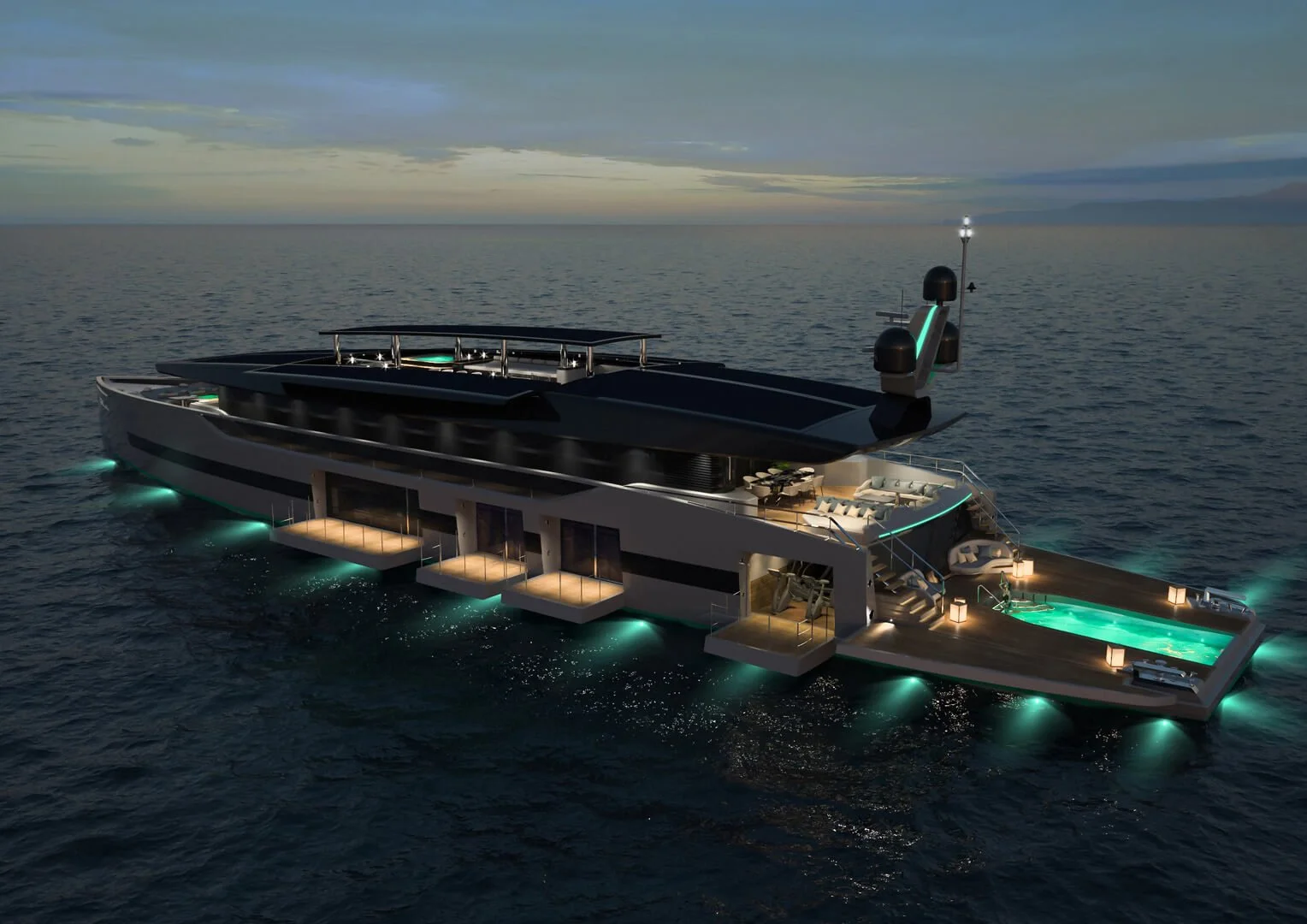
VisionE 56, designed by Marco Casali Too Design
The strongest argument for sustainability, then, may be experiential. A quieter yacht at anchor. A bay without generator noise. No smell of exhaust. A smoother and calmer cruising experience. These are not abstract environmental benefits; they are immediately felt by everyone onboard. In that sense, sustainability becomes less of a moral message and more of a superior way to live at sea.
This is also why Casali believes owners have become more sophisticated in recent years. The market is no longer as easily impressed by claims that merely sound green. Owners are asking sharper questions and, in many cases, pushing harder than the shipyards themselves. Casali notes that shipyards can still be conservative by nature, while owners, particularly those with a clear personal vision, are often more willing to challenge convention.
That shift is important for the future of yacht design. If owners are becoming more capable of identifying the difference between real progress and surface-level messaging, the industry will have to respond with more substance. Sustainability will need to be measurable, usable and visible in the lived experience of the yacht. It will also need to be integrated into the earliest decisions, not added as a layer once the core design has already been fixed.
For Türkiye, Casali sees a significant opportunity in this transition. Having worked closely with Turkish shipyards, he describes the country as one of the best places in the world to build a yacht, as well as one of the most compelling places to cruise. But his point goes beyond production capability. Türkiye’s opportunity is not only to build efficiently, competitively or beautifully. It is to become a place where new ideas are genuinely tested and delivered.
Casali sees a clear generational shift within the Turkish shipbuilding landscape. Younger shipyard owners are increasingly focused not only on price, but also on innovation, design quality and uniqueness. This is visible, he suggests, in the growing individuality of yachts emerging from the country. For an industry looking for credible places to turn sustainable ambition into finished projects, that combination of craft, ambition and openness to innovation could become a defining advantage.
Ultimately, Casali’s sustainability vision is not built around one technology or one perfect solution. It is built around a different image of yachting itself. When asked what would make him feel, five years from now, that the industry had moved beyond sustainability as a trend and started creating real impact, he does not describe a regulation, a propulsion system or a certification.
He imagines a crowded summer bay in complete silence, with people enjoying the sea in a closer relationship with nature. For him, that is the point. Real impact will not only be measured in technical specifications. It will be measured in whether yachting can preserve the emotion, freedom and pleasure of life at sea while removing more of the noise, waste and distance that separate people from the environment they came to enjoy.
If the industry can show that version of yachting to the next generation, Casali believes it becomes something worth protecting. Not just a luxury object, but a gift to be shared, valued and passed forward.
